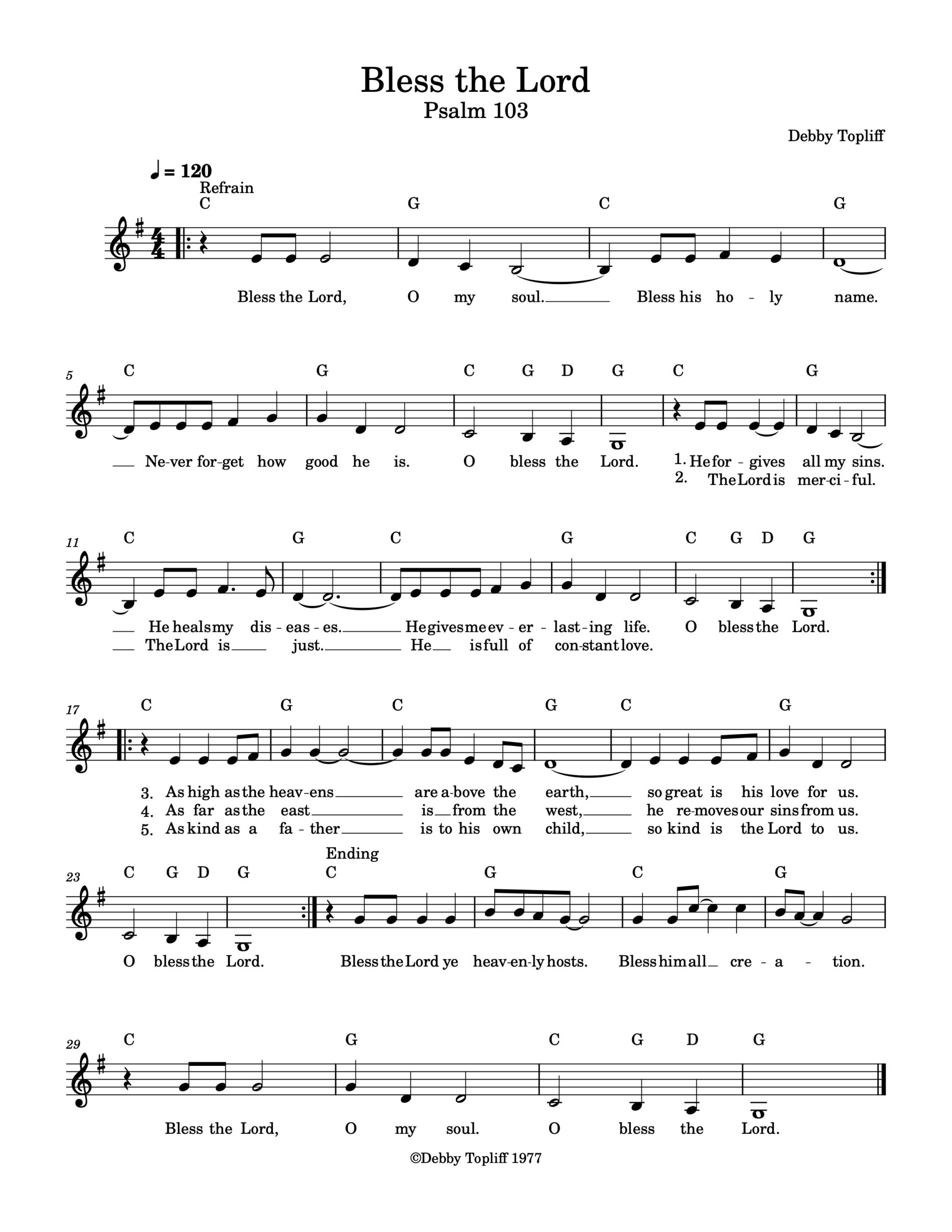
Bless the Lord
Psalms are songs. As a child I attended Saint Andrews Episcopal Church in Ann Arbor and we often chanted Psalms from the unique translations of the Book of Common Prayer. That solemn practice touched and quieted my soul and created a space for my nascent faith to grow.
Church was a confusing experience for me. My father never attended. My mother, who had left Catholicism when she got married, “Just in case I ever want to get divorced,” was sometimes there, but her manner was anything but prayerful. I tried to work myself into a state of “holiness” as I imagined it, only to be scolded or scorned by her anxiety and anger. It didn’t make sense. Something wasn’t working. It all felt phony.
As I moved into adolescence, the biggest draw to attending church was the opportunity to gaze at the dreamy altar boys who were heaven on earth for a twelve-year-old! Mid-week Confirmation classes and dinner brought us face-to-face with young Episcopalians from the other two junior high schools. I was eager to go.
The catechism, however, mystified me. I asked the rector, “Why should I become an Episcopalian and not a Presbyterian or a Buddhist or a Hindu?” He told me to toe the line and ask questions later. That only added to my sense of the church’s hypocrisy. Years later, after a dark and dangerous journey through the mire of drugs and despair, I found my way back to God. My first apartment when I returned from England and Switzerland to the University of Michigan was right in the crook of the elbow of Saint Andrews Episcopal Church. I went to talk to that same rector and told him of my conversion experience. He dismissed me saying, “Oh, you were just wandering in the wilderness like the Israelites.”
All I could think was, what about all the people who didn’t survive the wilderness?
Putting Psalm 103 to music is my tribute and thanksgiving for God rescuing me and forgiving my sins, for separating me from my old life and not holding my mistakes against me. “Never forget how good he is!”