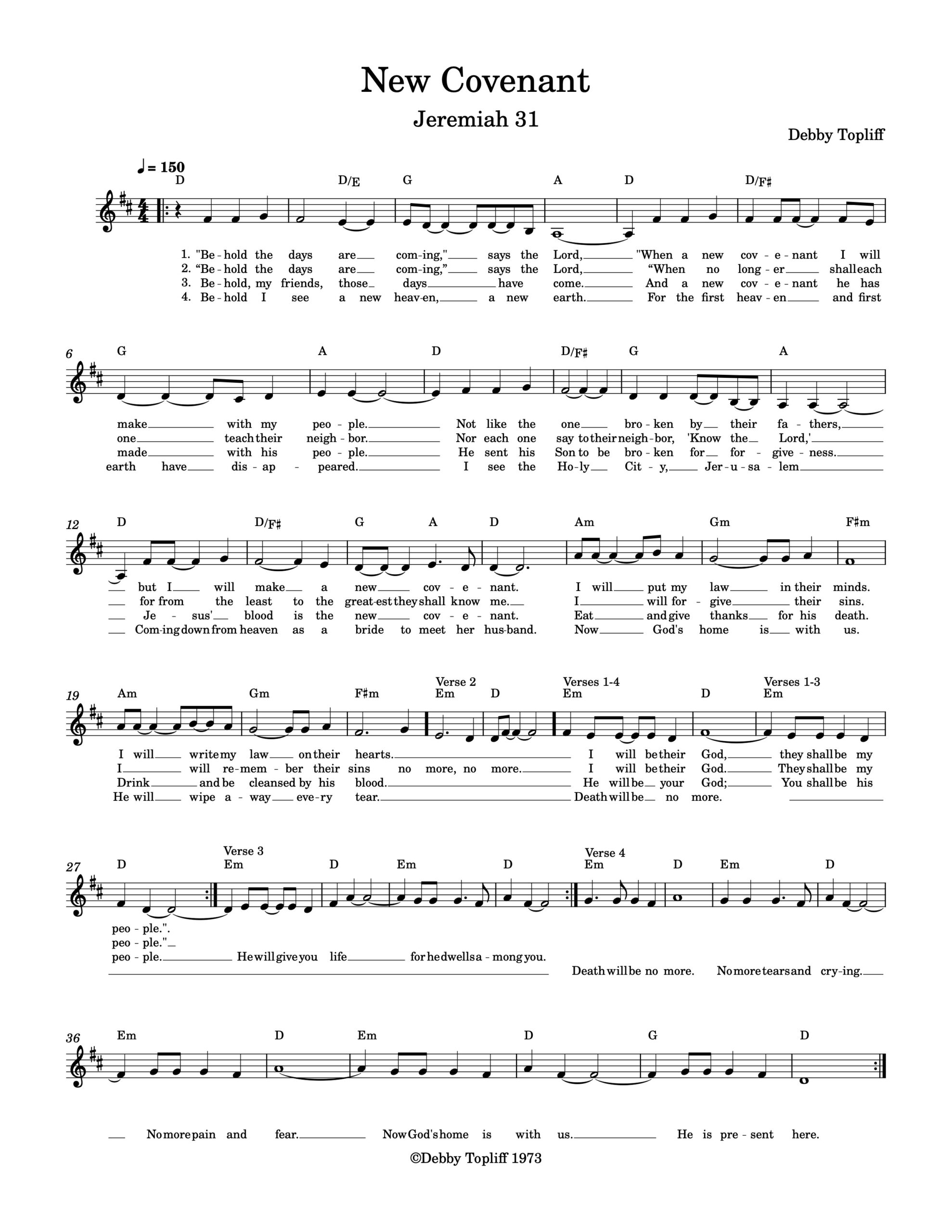
New Covenant
When I became a Christian in 1970 at a study
center called L’Abri, high in the Swiss Alps,
one of the puzzle pieces that helped me begin to
find my way toward wholeness was the realization that God did not leave us without a road map for how to live in this world. The authors of the Bible, people who knew God, provide trustworthy signs and instructions. Though the sixty-six biblical books, written thousands of years ago, are diverse and complicated, together they paint a clear picture
of who we are, who God is, and how we can align ourselves with his purposes.
Themes introduced in Genesis, a book that
explains why human beings are a blend of good and evil, are illustrated and added to by books of history and prophecy, by personal poetic journals and lists of insights, by carefully researched portraits of Jesus, and by letters to specific groups of people who committed their lives to the journey of faith.
One of the core themes underpinning the Bible is that of covenant—an agreement or promise between people for the purpose of a cooperative relationship.
The first covenant in the Bible, in Genesis 2, is
between God and humans: God provided them with all they needed for a joyful relationship with creation, with animals, and with him. Their side of the agreement was to demonstrate their trust in him by refraining from eating the fruit of one specific tree. All other trees were allowed. But they chose to believe the Liar who twisted God’s words. The covenant was broken and their relationship was severed.
About ten generations later, as evil multiplied,
“The Lord saw how great wickedness on earth had become, and that every inclination of the thoughts of every heart was only evil all the time. The Lord was grieved that he had made people on earth, and his heart was filled with pain.” Genesis 6:5-6.
God’s solution was to wipe the slate clean and
start over by making a second covenant with Noah, whom the Bible calls a righteous man. That didn’t work well either.
Finally, God rebooted his relationship with
humans by calling another righteous, yet child-
less man, Abraham, to leave his moon-worshipping country, travel to a new location, and enter into covenant with God who promised to create a whole nation through him. This is what became the people called Israel. Despite many miraculous experiences, Abraham’s descendants abandoned their trust in
God and veered into evil.
Jeremiah, one of the major prophetic voices in the Old Testament, recognized Abraham’s cove-
nant was not going to work. In chapter 31 he states clearly that God is going to make a new and different kind of covenant, one in which he puts his law in our minds and writes it on our hearts.
My second song pulls these promises together with their fulfillment in Jesus’ life, death, and resurrection, and ultimately in his return with a new heaven and new earth.