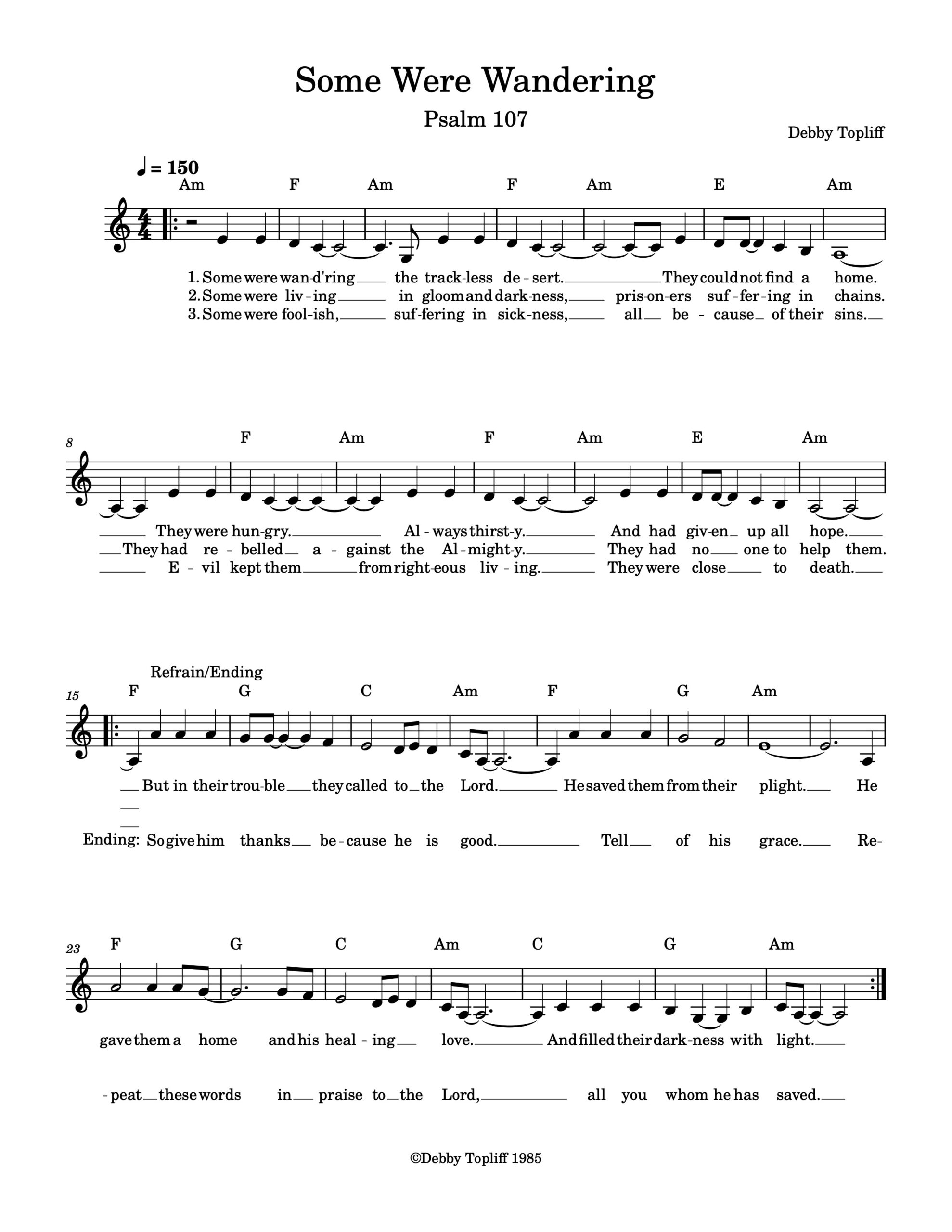
Some Were Wandering
One morning I was sitting in my bedroom reading Psalm 107. The arrangement of the stanzas and the repetition within and between them looked to me exactly like verses of a song. Similar to Psalm 49, my song about money, this song practically wrote itself.
Although these descriptions of people in various kinds of trouble can be taken literally in their historical contexts, I also find them insightful for the psychology of the human condition: The first group are lost, wandering in wilderness, unable to find a home. They are hungry and thirsty and have no hope. When they cry out to God, he delivers them from their distress and leads they on a straight path to a place of safety. The next group are living in darkness and depression like prisoners in chains. Their stress is the result of rebelling against the words of God and rejecting his wisdom. When they stumble in their darkness, there’s no one to help them—until they cry out to the Lord. He breaks their chains and brings them into the light. The third group are also rebellious. They are fools who end up sick and near death. When they cry out to God, he rescues them from death by sending his healing word. The final group, which I didn’t include in my song, are merchants in ships caught in a terrible storm. The modern parallel is the fear-inducing uncertainty of the economy. God hears their cry and calms the sea, guiding them into a safe haven.
What all these perilous situations have in common is that it is only by acknowledging God for who he, asking for help, and and listening to his Word that we find our true home. When we humble ourselves before him to live and walk in the light, we are protected from death and find our true treasure.